
 Deutsch
 English
 Chinese

COP31 in Antalya: VCAC President Professor Michael Zhengmeng Hou meets international delegates and joins a roundtable
Pavilion visits, invitations to side events and a look at TU Clausthal’s research
On 14 November 2026, Prof. Dr.-Ing. Michael Zhengmeng Hou, President of the Chinese Alumni Association of TU Clausthal (VCAC) and professor at Clausthal University of Technology, met with delegates in the Blue Zone at the 31st United Nations Climate Change Conference (COP31) in Antalya, Türkiye, and spoke at a roundtable at the organisers’ invitation. The 12 members of the TU Clausthal team spoke with delegates from several countries and institutions about the proposed Global Climate Responsibility and Resilience Fund (GCRRF), the 4CUS approach to a circular carbon and energy economy, climate finance and international cooperation.
Meetings at the Sweden Pavilion and invitations to international experts
At the Sweden Pavilion, Professor Hou introduced the team’s research on climate governance and low-carbon energy, discussed GCRRF and 4CUS with delegates and invited experts to the team’s two side events on 16 November.
Professor Hou also met representatives at the European Union and Greece pavilions and from other organisations. At the EU Pavilion, he used the GCRRF briefing materials to introduce the proposal. At the Greece Pavilion and in the exhibition area of a regional climate foundation, he discussed the team’s research and upcoming events.
The team used these face-to-face meetings to invite more international experts to the side events. It hopes to bring a wider range of regional perspectives to the discussions by drawing on experience in sharing climate responsibility, deploying climate finance and applying low-carbon technologies.
TU Clausthal receives a circular economy award and a project is featured in a white paper
During the conference, Professor Hou accepted two certificates on behalf of TU Clausthal. The university received the Global Circular Economy Excellence Practice Award. Its project “Large-Scale Underground Intelligent Energy Storage System Integrating Multiple Green Electricity Conversion Pathways” was selected as an outstanding case for the white paper “Chinese Technological Innovation for Global Low-Carbon Transformation”.
Carbon Neutral Systems takes part at COP31 and accepts a paper on GCRRF
The Springer Nature journal Carbon Neutral Systems (CNS) is one of the sponsors of the activities covered here. Its logo appeared on an event backdrop at the pavilions. Professor Hou and the organisers introduced the journal in their conversations with delegates, giving CNS an opportunity to connect with researchers working on climate governance and carbon neutrality.
According to the team, CNS has formally accepted a paper on the GCRRF proposal co-authored by 168 researchers from around the world. The paper will be published shortly. It will also inform future discussions among researchers from different countries on climate responsibility and resilience.
Two side events and a joint press conference
The pavilion visits and invitations were also part of preparations for the events on 16 and 17 November. As previously announced, the TU Clausthal team will hold two side events and a joint press conference in Room B345 in the COP31 Blue Zone. The events will bring together international colleagues to discuss climate finance mechanisms, technologies for circular carbon and energy use, and opportunities for collaboration.
16 November, 09:00–11:00
Side Event 1 | Global Climate Responsibility and Resilience Fund (GCRRF)
16 November, 11:30–13:00
Side Event 2 | From CCUS to 4CUS: New Technologies for a Circular Carbon and Energy Economy
17 November, 16:30–18:00
Joint Press Conference | 4CUS and GCRRF
All times are local to Antalya (UTC+3). The events will take place in Room B345 in Area B2 (Delegation Pavilions) of the Blue Zone. Please follow the organisers’ arrangements for in-person attendance.
Sharing climate responsibility and building resilience
The first side event will examine Professor Hou’s proposal for a Global Climate Responsibility and Resilience Fund. Participants will discuss how to raise climate finance, how countries should share the responsibility for contributing, which regions should receive priority and how to assess the results. The aim is to explore approaches that account for historical responsibility, current capacity and climate vulnerability.
4CUS research and opportunities for collaboration
The second side event will present recent research on 4CUS. The approach explores whether depleted oil and gas reservoirs with suitable geological conditions can serve as underground bioreactors. Microorganisms would convert carbon dioxide and a suitable hydrogen source into renewable natural gas made up primarily of methane. The approach would also integrate underground energy storage. Participants will discuss the technology’s prospects, what still needs to be validated and where international research teams could work together.
At the event on 17 November, the team will introduce GCRRF and 4CUS to delegates and journalists and discuss climate finance, research progress and possible areas of collaboration. Researchers, industry representatives and members of the media are welcome to follow the events.
For attendance enquiries, media interviews and collaboration, contact hou@tu-clausthal.de.
A roundtable on low-carbon development at the CEEP-BIT Pavilion
That afternoon, Professor Hou spoke at a roundtable at the CEEP-BIT Pavilion in Room B345 in the Blue Zone. There, he joined experts from China and other countries in a discussion on low-carbon energy, climate governance and international cooperation. The pavilion is run by the Center for Energy and Environmental Policy Research at Beijing Institute of Technology.
The discussion also included Professor Qingzhe Jiang, former secretary of the Party Committee of the University of International Business and Economics and dean of the China Institute for International Carbon Neutrality Economics, and Professor Xiucheng Dong, the institute’s executive dean and a foreign member of the Russian Academy of Mining Sciences. Professor Hou exchanged views with Professor Jiang on the materials and explored opportunities for cooperation on climate governance and carbon neutrality with other guests.
The roundtable gave researchers and delegates from different fields an opportunity to speak directly and carry those conversations into the upcoming GCRRF and 4CUS events. VCAC will continue to share updates on the team’s COP31 activities with alumni.
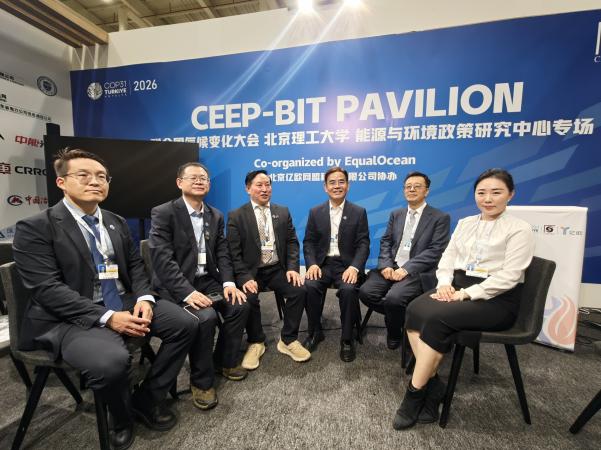
Group photo with guests at the CEEP-BIT Pavilion.
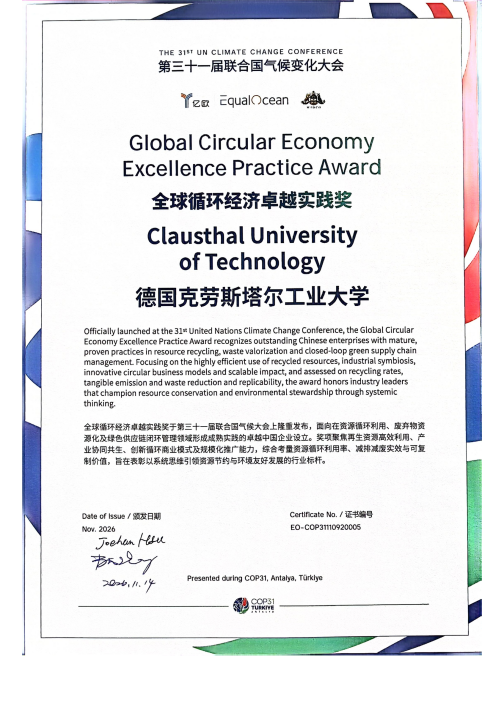
TU Clausthal receives the Global Circular Economy Excellence Practice Award.
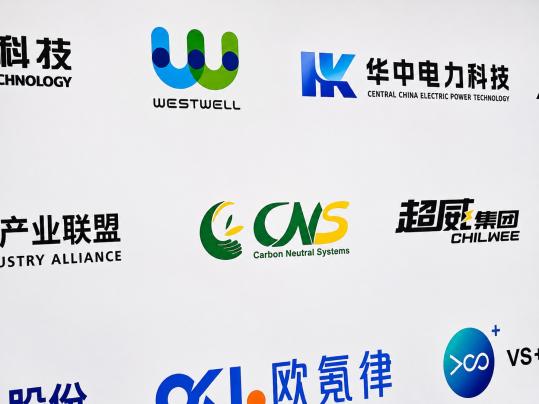
The Carbon Neutral Systems logo on an event backdrop.
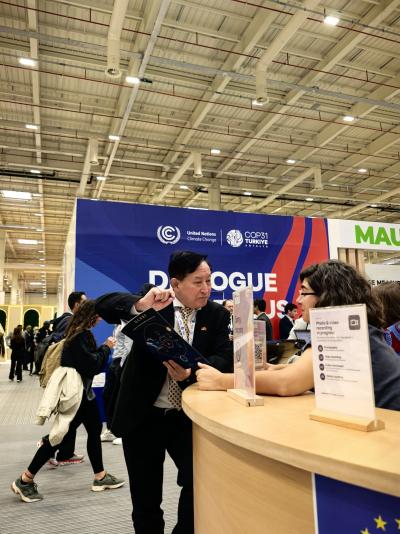
Professor Michael Zhengmeng Hou introduces GCRRF at the EU Pavilion.
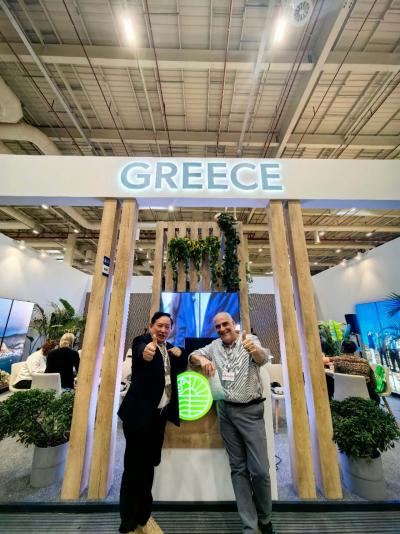
Professor Hou speaks with delegates at the Greece Pavilion.
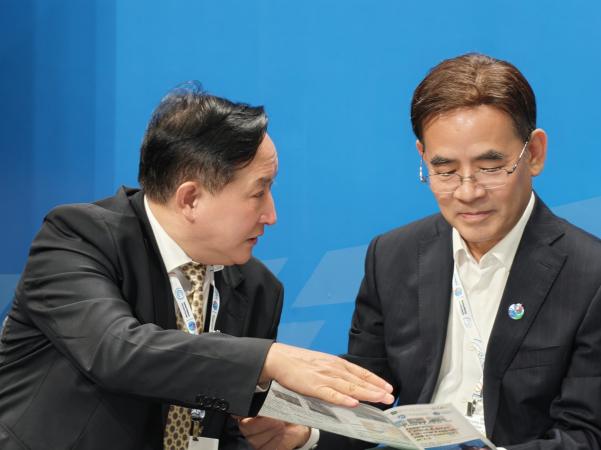
Professor Michael Zhengmeng Hou in conversation with Professor Qingzhe Jiang.
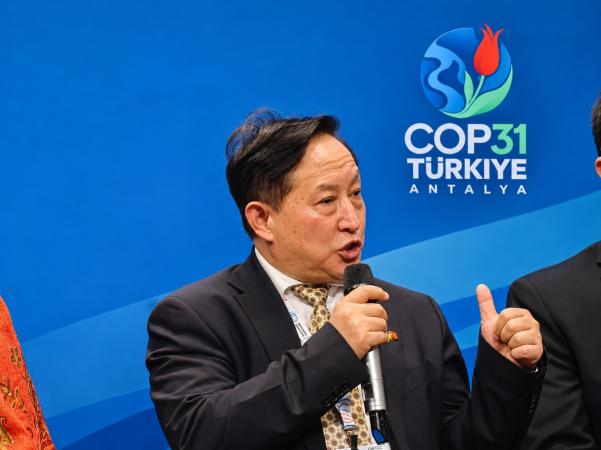
Professor Michael Zhengmeng Hou speaks at the roundtable.
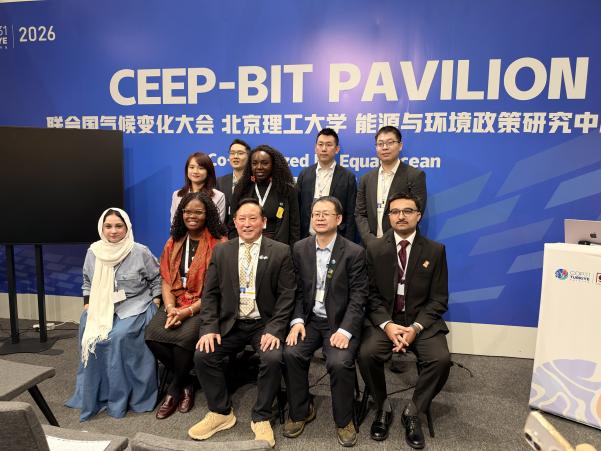
Professor Hou joins international guests for a group photo.
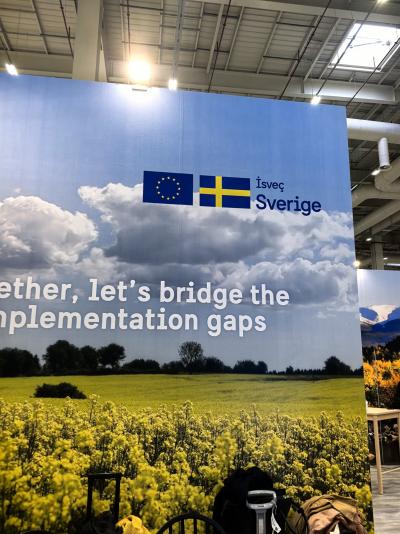
The Sweden Pavilion at COP31.
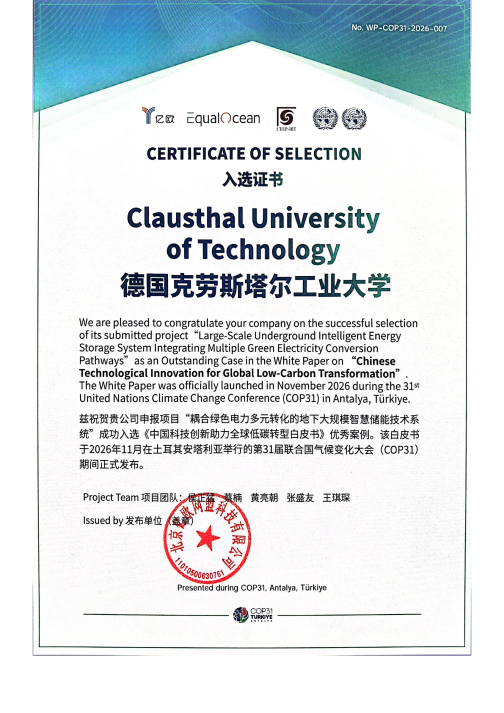
Certificate confirming the selection of TU Clausthal’s project as an outstanding case for the white paper.